How Productivity Metrics Help Achieve Business Goals
Productivity metrics are becoming a norm for businesses and organizations of all sizes, but only because it gives managers, executives, some insight

Tracking productivity metrics is key to achieving your business goals. Without clear insights into team performance and efficiency, businesses often struggle to identify gaps, make informed decisions, or improve processes. Productivity metrics provide a simple way to measure progress, optimize operations, and drive success.
When your team’s performance is measured, it creates a sense of accountability and highlights growth opportunities. This leads to better decision-making, smoother workflows, and higher customer satisfaction. In this blog, you will explore how productivity metrics can help your business and tips to achieve your goals effectively. Let’s dive in!
How Productivity Metrics Helps for Businesses?
Following productivity metrics provides essential information about your team’s performance levels. Business productivity tracking helps you make decisions from accurate data while improving operational efficiency. Here’s how it benefits your organizations:
1. Provides Clear Performance Insights
Your team’s overall performance becomes visible through productivity metrics. These metrics help you track the tasks that take more time to complete than estimated time. And also, you can identify which teams perform best. The collected information helps you identify and resolve operational slowdowns. The insights help you optimize operations and enhance total operational efficiency.
2. Improves Decision-Making
Tracking productivity helps you collect important data that allows you to make better-informed decisions. The data you collect from tracking helps you assign resources efficiently while setting goals and planning future projects clearly. Then, you can make better choices that enhance overall operational efficiency. Your business will achieve better strategies and long-term success through ongoing data collection.
3. Boosts Accountability
When your teams adopt metrics, they become accountable for their role responsibilities. Measuring employee work performance leads employees to maintain focus while knowing their responsibility for assigned tasks. The workplace becomes more responsible and driven when team members understand their work is being measured. Your teams like to improve their performance better to achieve the best results when they observe their work achievements being rewarded.
4. Identifies Growth Opportunities
Productivity metrics analysis reveals opportunities for performance enhancements in your team. Invest in training and tools for your business to speed up operations when particular tasks slow down processes. When you adopt this technique, your organization builds sustainable development over time. The analysis of trends and patterns leads to risk prediction while keeping organizational control stable.
5. Better Customer Satisfaction
Better productivity reduces project timeframes and improves output performance. The delivery of timely and effective services to clients results from better productivity which directly affects customer satisfaction. Your business gains more sales and new customer referrals from existing customers through strong satisfaction levels. Positive feedback from better customer satisfaction helps to increase your brand reputation.
6. Supports Goal Tracking
The ability to monitor business goals becomes simpler through the use of clear productivity measures. You can modify your plans if necessary easily by comparing actual outcomes with your expected results from these metrics. Your business stays on track toward success through this approach. Talking with team members about metrics regularly helps you stay accurate to business vision and goals.
Track, Measure, and Improve – Set Up Productivity Metrics with Time Champ!
Start your free trial today and see the difference.
Tips for Using Productivity Metrics Effectively
Let’s take a look at some of the best tips for using productivity metrics effectively to meet your business goals:
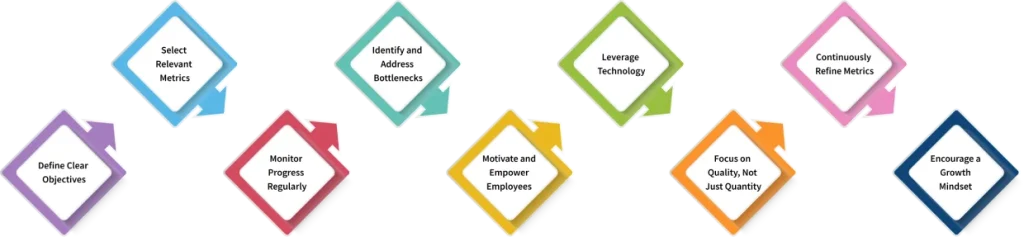
1. Define Clear Objectives
Businesses need to start with well-defined objectives to become successful. Success evaluation along with progress assessment becomes difficult when there are no clear goals.
When you define your targets clearly it gives employees both direction and purpose toward their work. For example, if your goal is to reduce project delivery time, then make it specific, “reduce project timelines by 20% over the next three months.” If objectives are clear and measurable, they become a roadmap by helping everyone stay on the same path and completely focused on the goal.
In addition, they provide clear objectives to prioritize tasks. Employees know which activities need immediate attention and it minimizes confusion and maximizes productivity. To keep a steady progress without overwhelming your team, you set realistic and achievable goals.
2. Select Relevant Metrics
Some metrics don’t bring any insights, therefore you need to filter out only the most valuable ones for your business. For example, suppose your main objective is to satisfy customers, then monitoring response time, and reaction to feedback, may be more important than monitoring task completion.
Metrics that are relevant to your goals keep you aligned and measure progress well. Don’t choose too many metrics because this will make tracking hard. Instead, focus on a few key ones that can help you make a decision. When your metrics relate to specific objectives, they keep you on track and allow you to make better choices.
3. Monitor Progress Regularly
It’s not enough to track metrics once in a while. If you want to see meaningful results, you have to be consistent about monitoring progress. Regular reviews provide you with a view of how your team is performing. This shows you trends, what you need to improve, or what you need to adjust.
For example, checking the weekly performance reports allows you to spot work that is taking longer than expected. This data allows you to quickly adjust processes, redistribute the workloads, or give your team some additional support. Small issues don’t grow into bigger problems if you regularly monitor them.
4. Identify and Address Bottlenecks
There are challenges in every workplace that slow down productivity. These bottlenecks can be an outdated process, lack of communication, resource shortages, or something else. Productivity metrics will help you pinpoint precisely where these issues occur.
For example, if a task always runs longer than the estimated time, it means that some better process should be required to finish that task within the deadline. If you know what the problem is, your solutions will focus on updating procedures, better communication between team members, or additional training. Bottlenecks are eliminated to achieve smoother workflows and save lots of time.
5. Motivate and Empower Employees
Metrics aren’t just for managers, they can be inspirational to your team as well. Seeing how their contributions make a difference to overall goals in the workplace makes employees feel more connected to workplace success. You can set clear targets for your employees, and progress them regularly. And also appreciate them offering awards, and incentives because of working hard for your business growth.
For example, encouraging an employee who always exceeds their goal will help to boost morale while boosting other employees’ motivation. If employees are valued and they are empowered to own their work, they become more engaged and that directly leads to productivity.
6. Leverage Technology
Modern technology helps organizations track and control their productivity performance metrics. Tools like automated trackers, time management apps, and project management software can simplify data collection and analysis. These productivity tools help you achieve time efficiency while decreasing mistakes and delivering precise analytical data.
For instance, if you use software to track project timelines, you are able to see delays very quickly and make quick changes. Automation decreases the amount of manual tracking work which frees up time for your team to concentrate on main tasks. Tools help you measure productivity and improve efficiency.
7. Focus on Quality, Not Just Quantity
Productivity isn’t just about doing more, it’s about doing better. You can easily get lost in how much work you complete, but the true metric of success is the quality of that work. For example, completing 50 tasks quickly doesn’t mean anything if the tasks are filled with errors.
Your metrics should focus on quality indicators instead of speeding up processes because customer satisfaction scores and error rates define quality performance. Your business benefits from high-quality work through enhanced reputation and reduced need for rework and the creation of enduring value.
8. Continuously Refine Metrics
Your goals and priorities will change as your workplace evolves. That’s why you need to review and update your metrics regularly. Some metrics that were important a year ago may not give you relevant insights today.
For example, if you have expanded your team, now you may need new metrics to track collaboration or communication. Keeping your metrics updated regularly keeps your current goals on track. It also allows you to refine your approach in a rapidly changing business environment.
9. Encourage a Growth Mindset
A growth mindset creates resilient behavior along with flexible adaptability and an active desire to develop skills. People who believe improvement happens through determined effort become open to both constructive feedback and professional development challenges.
You should utilize productivity metrics to provide feedback that helps employees both learn new skills and grow professionally. Support your employees who miss deadlines by helping them understand their performance weaknesses. And then offer training if necessary. The development of a growth mindset enables employees to continuously learn thus leading to enduring organizational success.
Set up your Workforce Metrics with Time Champ
Workforce metrics play a crucial role in tracking employee performance, productivity, and operational efficiency. You can set up and monitor key workforce metrics to optimize their operations and ensure employees stay engaged and productive using Time Champ. Below are the essential workforce metrics and how Time Champ helps in setting them up effectively.
1. Employee Productivity Rate
One of the most important metrics in Time Champ is employee productivity analysis, which provides insights into how employees utilize their work hours. Time Champ categorizes employee time into productive, non-productive, and neutral based on application usage and activity. You can visualize how employees spend their time throughout the work shift, displaying fluctuations in productive and non-productive activities by productivity bar.
2. Time Utilization Rate
Another vital metric is the time utilization rate, which ensures employees are making the most of their working hours. Time Champ monitors total work hours, active engagement time, and distractions to provide insights into how time is being used. You can set up time tracking for different projects and compare planned versus actual working time to optimize workforce efficiency.
3. Attendance & Punctuality
Attendance & Punctuality is a key metric that helps you maintain discipline and accountability in work schedules. Time Champ offers automated attendance tracking, you can easily track late arrivals, early departures, and absenteeism. You can also get accurate attendance records using Time Champ.
4. Overtime Tracking
To prevent excessive workload and ensure compliance with labour laws, overtime tracking is essential. Time Champ logs extra working hours and generates detailed reports on overtime trends. You can set customized thresholds for overtime to manage employee workload effectively.
5. Project and Task Performance
For project-based work, project and task Performance is a critical metric. Time Champ’s project management feature helps you to manage your projects and tasks. You can track the time spent on each task and identify delays or bottlenecks that may affect project completion. You can define tasks within projects and analyze time logs to gain performance insights and make informed decisions.
6. Idle Time & Distractions
Idle Time & Distractions is another crucial metric that helps minimize non-work-related activities. Time Champ detects idle time, and non-productive applications, and provides alerts when distractions occur. By customizing idle time detection settings and blocking unnecessary distractions, you can ensure employees remain focused on their tasks.
7. Billable vs. Non-Billable Hours
For service-based businesses, tracking billable and non-billable hours is crucial to maximizing profitability. Time Champ differentiates between billable and non-billable hours with detailed logs, helping you analyze how time is allocated to revenue-generating tasks. You can tag tasks as billable or non-billable and use profitability reports to optimize resource allocation.
Ready to Boost Productivity? Set Up Time Champ Now!
Start your free trial today and see the difference.
Final Thoughts
Productivity metrics are not just numbers, they are the tools that help to guide your workplace to success. Your organization will flourish through efficient work practices by defining measurable targets following essential metrics and active team member participation. Use technology to leverage, refine your metrics, and empower your employees to stay motivated and in the zone. Productivity metrics can help you reach your business goals quicker and more efficiently when you implement them better.

Sai Keerthi Uppala

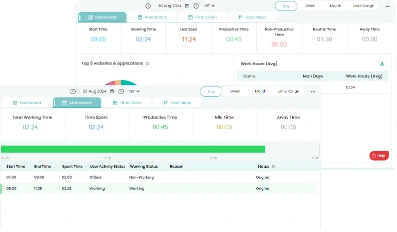
Table of Content
-
 How Productivity Metrics Helps for Businesses?
-
Tips for Using Productivity Metrics Effectively
-
Set up your Workforce Metrics with Time Champ
-
Final Thoughts
Related Blogs

Analyze and improve employee performance with ‘Lifetime Heat Maps’ for detailed insights and data-driven results.
Thasleem Shaik | 18 March 2025
Discover the best ways to introduce productivity monitoring in your organization smoothly and effectively.
Thasleem Shaik | 18 March 2025
Boost team productivity and performance with effective tracking methods. Enhance productivity through data-driven insights and actionable strategies.
Shabana Shaik | 17 March 2025
Productivity Tracking Software helps remote teams stay on top, track progress, streamline workflows & boost efficiency effortlessly. Learn more!
Shabana Shaik | 15 March 2025
Learn how to boost productivity by finding the right balance in employee monitoring, focusing on key indicators, and maintaining transparency
Tarun Kumar | 14 March 2025
Boost employee productivity with workday insights that improve efficiency, streamline workflows, and drive better performance.
Thasleem Shaik | 13 March 2025


 4.7/5 avg.
Ready to Manage Your Workforce Smarter?
Join our family of 1100+ companies using smart insights to redefine workforces!

Free Trial
No Credit Card Required