Resource Allocation Time Tracking for Better Efficiency
Learn how resource allocation time tracking helps ops leaders balance workloads, improve utilization, reduce scheduling conflicts, and assign work confidently.

You constantly juggle deadlines, shifting priorities, employee availability, and last-minute project changes, but it still feels difficult to understand who actually has the capability to take on more work. Without proper visibility into how time is managed, workload balance becomes harder, productivity levels start to drop, and resource allocation decisions rely more on guesswork without the true capacity and work information. Resource allocation time tracking gives you a clearer view into the team workloads, actual work patterns, and resource capacity so that you can plan and assign the work with greater confidence.
Ahead, you’ll learn how time tracking improves resource allocation, which metrics are most important, and how ops leaders can use workforce data to balance workloads more effectively. Additionally, you will also see some practical ways to turn time insights into better plan utilization and team performance.
What Is Resource Allocation Time Tracking?
Resource allocation time tracking is the process of tracking how employee time is distributed across projects, tasks, and teams to understand actual workload, resource availability, and work capacity. It helps you assign work more efficiently, balance workloads, and improve overall team utilization and project planning.
However, without accurate time visibility, you may experience uneven workloads, project deadline delays, conflicting resources, and employee burnout. Workforce allocation tracking enables ops leaders to make accurate decisions, enhance productivity, and distribute the work based on actual team capability and workload data.
Common Resource Allocation Challenges Ops Leaders Face
Resource allocation can be quite challenging for operations teams whenever there is a sudden change in workload and an unclear team capacity. The following challenges explain why workload planning becomes difficult and how better visibility into time and resources helps your teams work more efficiently.

Lack of Resource Visibility
Challenge: You may struggle to figure out who is overloaded, who is available, and how much time tasks actually require. This develops confusion in workload planning and increases the risk of missed deadlines.
Solution: Tracking employee time and workloads gives you better visibility into resource capacity and task progress. It becomes easier to distribute work fairly and make better staffing decisions.
Constantly Changing Priorities
Challenge: Changing deadlines, urgent requests, and shifting business needs make it difficult to maintain balanced workloads. You may end up reassigning tasks without clear visibility into employee availability.
Solution: Real-time tracking helps you quickly adjust workloads based on the current priorities and team capacity. This improves flexibility without creating unnecessary pressure on employees.
Skill Gaps Across Teams
Challenge: Assigning work without understanding your employee strengths and expertise can slow down projects and reduce overall productivity. Some employees become overloaded while others remain underutilized.
Solution: With greater insight into worker capabilities, efficiency levels can increase, and tasks can be assigned based on employee performance and availability.
Scaling Without Resources
Challenge: Many teams handle growing workloads without additional support or staff. Over time, this may lead to burnout, delays, and declining productivity.
Solution: Accurate workload tracking provides you with the opportunity to identify problems earlier and plan accordingly. You can make smarter allocation decisions before workloads become unmanageable.
Invisible Work and Last-Minute Requests
Challenge: Meetings, quick fixes, support tasks, and unexpected requests consume more time, but they are rarely included in the workload planning. This unseen work affects productivity and resource availability.
Solution: Resource allocation time tracking helps you identify both planned and unplanned work activities. This creates an effective view of how employee time is actually spent.
Struggling to balance workloads and understand who actually has available capacity?
Time Champ helps you track workloads and utilization in real-time.
How Does Time Tracking Improve Resource Allocation?
Uneven workloads, poor task visibility, and inaccurate planning can make resource allocation difficult for operations teams. Here’s how time tracking can help improve resource allocation across teams and projects.
- Better Workload Balance: Time tracking can help you spot overloaded and underused employees before their workload becomes unmanageable. This makes it easier to distribute work fairly and reduce employee burnout.
- More Accurate Project Planning: Tracking actual work hours helps your teams estimate project timelines, staffing needs, and workloads more accurately. It also reduces planning mistakes caused by assumptions and inaccurate estimates.
- Smarter Task Allocation: Time tracking will give you complete visibility into employees' availability, efficiency, and distribution of tasks among team members. You can allocate the right people depending on actual employee capabilities and performance.
- Improved Financial Efficiency: Poor resource planning increases the idle hours, overtime costs, and unnecessary operational expenses. Time tracking helps you use employees' time more effectively and enhance overall productivity.

Did you Know?
According to a Gartner report, many business leaders are handling heavier workloads, with 67% saying their responsibilities have increased and 44% reporting higher work-related stress compared to two years earlier.
Which Resource Metrics Should Ops Leaders Track?
Many operations teams capture time information, but do not understand which metrics actually help to improve workload planning and resource decisions. Tracking the right resource metrics gives you a clearer view of team capacity, workload distribution, productivity, and overall operational efficiency.
1. Utilization Rate
Track how much of an employee’s available work time is spent on productive or billable tasks. This helps you recognize overloaded, underutilized employees and overall workforce efficiency.
2. Capacity vs Workload
Measure the difference between employee availability and assigned work. This helps you understand whether teams have enough capacity to handle the current workload without creating burnout or delays.
3. Task Completion Time
Monitor how long employees take to complete specific tasks or projects. This helps you improve future project estimates and makes resource allocation time tracking more accurate and reliable.
4. Overtime Hours
Keep track of the extra hours employees regularly work beyond their normal schedules. Frequent overtime indicates poor workload balance, staffing shortages, or unrealistic project timelines.
5. Idle Time
Track time when employees are inactive or waiting for work. High idle time may signal poor task distribution, scheduling gaps, or inefficient resource planning.
6. Workload Distribution
Review how work is divided across individuals and teams. Effective workload distribution prevents employee burnout while increasing productivity and uniform project completion.
How Do You Optimize Resource Allocation with Time Tracking?
Resource allocation can be a major challenge for many teams when the workloads always change, and project estimations fail to match the actual work hours. Time tracking helps you to make smarter resource allocation decisions based on workload data, employee capacity, and productivity patterns.

1. Compare Estimated Hours with Actual Hours
Review how much time tasks were expected to take compared to the actual time spent on them. This helps you improve the accuracy of future planning and prevents unrealistic workload allocation.
2. Assign Work Based on Employee Skills
Track which employees complete certain tasks efficiently and consistently. Assigning work based on skills and performance helps to improve productivity and project quality.
3. Balance Team Workloads
Use workload data to identify overloaded employees and team members with available capacity. Redistributing work early helps you to reduce burnout and maintain steady productivity across teams.
4. Identify Time-Consuming Tasks
Track tasks that regularly consume excessive time without delivering expected results. This helps your teams reduce inefficiencies, remove bottlenecks, and focus more on high-priority work.
5. Use Automation for Better Planning
Automated time tracking gives you real-time visibility into workloads, availability, and project progress. This makes resource planning faster, more accurate, and easier to manage across teams.
How Time Champ Turns Time Data into Smarter Allocation
Many operational teams face difficulties in allocating resources properly because workload visibility, employee availability, and actual work hours are scattered across different systems. This makes it difficult to balance workloads, prevent burnout, and make confident staffing decisions. Time Champ is an employee time tracking and monitoring software with workforce intelligence features that help you manage workloads, track productivity, and improve resource allocation using real-time work data.
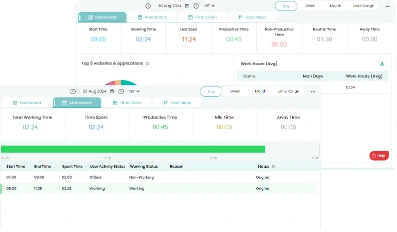
Time Champ automatically tracks employee work hours and activity as teams work, helping you compare planned workloads with actual effort without relying on manual timers or constant updates. Real-time workload and utilization dashboards show who is overloaded and who has available capacity across projects, making workload balancing easier. The platform also supports capacity planning by combining employee availability, project commitments, attendance, and leave data in one place to identify bottlenecks early. Features like app and website usage tracking help teams distinguish productive work from low-value activities, giving you a clearer understanding of how employee time is actually being spent.
Are uneven workloads, burnout, and project delays affecting your team productivity?
Time Champ helps you plan resources and balance workloads more effectively.
Conclusion
Managing workloads, project timelines, and team capacity becomes difficult when resource decisions are based on assumptions, not actual work data. Clear visibility into employee time, workload distribution, and resource utilization helps you make better staffing decisions, reduce burnout risks, and improve overall operational efficiency. Resource allocation time tracking gives your teams an accurate understanding of where work hours are spent, which employees have available capacity, and how workloads can be balanced more effectively. With the right tracking approach, you can improve planning accuracy, optimize resource utilization, and build more productive and sustainable operations as teams and workloads continue to grow.

Anjali

Table of Content
 What Is Resource Allocation Time Tracking?
- Common Resource Allocation Challenges Ops Leaders Face
- How Does Time Tracking Improve Resource Allocation?
- Which Resource Metrics Should Ops Leaders Track?
- How Do You Optimize Resource Allocation with Time Tracking?
- How Time Champ Turns Time Data into Smarter Allocation
- Conclusion
Related Blogs

Explore the most important productivity metrics and KPIs to measure employee performance, improve efficiency, and boost workplace productivity.
Anjali | May 12, 2026
Learn the difference between productivity tracking and time tracking, how they work, and which approach helps improve team performance and visibility.
Guna Lakshmi | May 09, 2026
Discover why organizations use workforce intelligence, the shift to predictive intelligence, how it shapes future work, and key emerging trends.
Shabana Shaik | February 11, 2026
Discover 10 key workforce planning metrics for 2025. Learn how these analytics metrics impact hiring, retention, productivity & strategic HR planning.
Guna Lakshmi | September 15, 2025
Discover resource planning templates for HR, projects, teams, and IT. Free downloads in Excel, Word, and PDF for efficient planning & how to manage it.
Thasleem Shaik | October 30, 2025
Improve ROI with productivity tracking software by reducing wasted time, recovering billable hours, and improving workforce efficiency.
Guna Lakshmi | May 11, 2026


 4.7/5 avg.
Ready to Manage Your Workforce Smarter?
Join our family of 1100+ companies using smart insights to redefine workforces!

Free Trial
No Credit Card Required