10 Best Reasons to Hold Meetings in Remote Work
Wondering why meetings are essential in remote work? Uncover 10 key reasons they improve communication, teamwork, and efficiency for your remote team!

Maintaining connections with your team in remote work can be difficult. Without daily meetings, messages pile up, misunderstandings happen and collaboration falters. However, when meetings are done correctly, they bring clarity, reinforce teamwork, and keep everyone on the same page. They allow you to solve problems quickly, engage more, and create a sense of belonging even miles away. If you are wondering why meetings still exist in a remote arrangement, here are the ten best reasons to make them a main part of your workflow.
Key Reasons to Hold Effective Meetings While Working Remotely
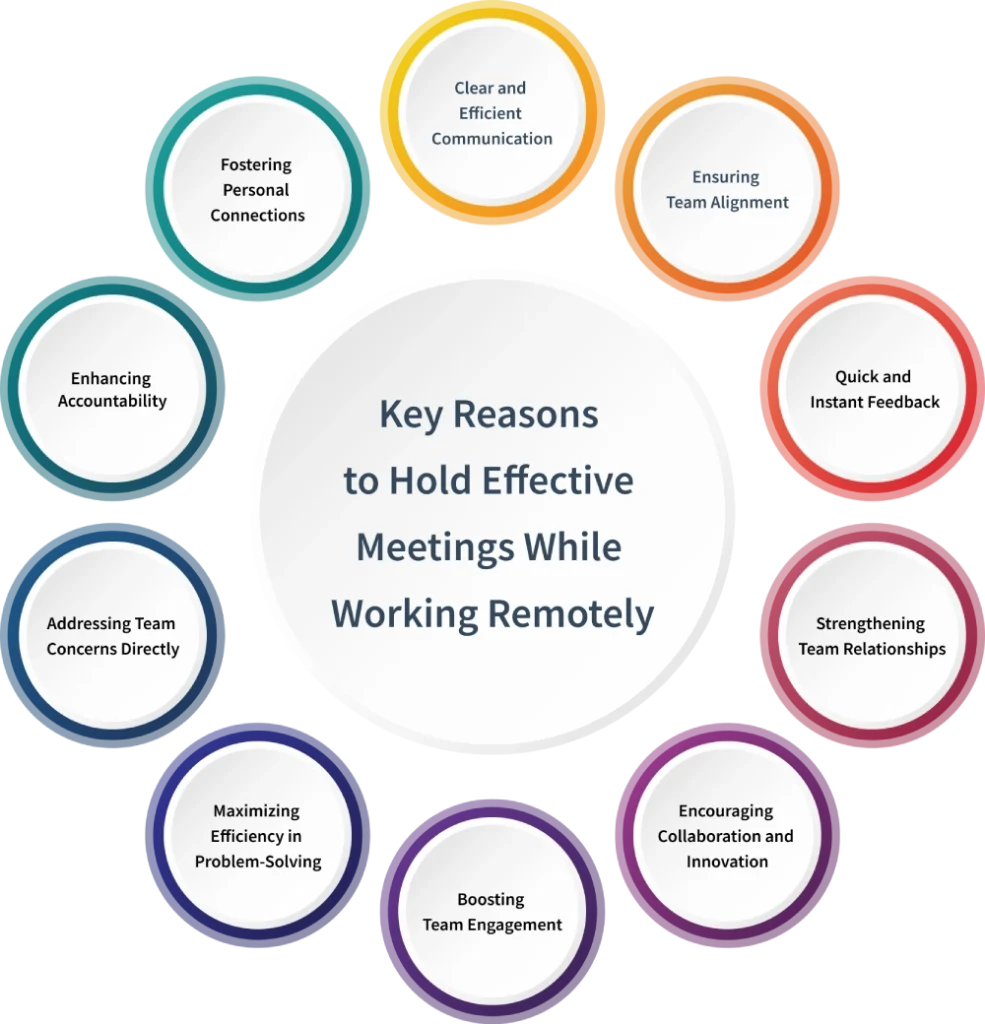
Here are some of the main reasons to hold meetings in remote work.
1. Clear and Efficient Communication
Emails, chats, and project management tools are essential to remote work, but nothing beats real-time conversation. Holding remote meetings eliminates the need for back-and-forth messages and everyone gets the same information at the same time. A well structured meeting will allow team members to ask questions, get immediate clarification and avoid miscommunication.
For instance, a 15-minute quick remote meeting can avoid a day’s worth of confusion over emails that have been misunderstood. This helps your team know exactly what is expected and therefore reduces errors and increases efficiency.
Enhance teamwork and productivity in remote work with Time Champ. Try it today!
Start your free trial today and see the difference.
2. Ensuring Team Alignment
When working remotely, it is easy for teams to forget the company’s goals or their purpose in a project. Regular remote meeting checkpoints ensure that every team member is aligned on tasks, deadlines, and expectations. Without these check-ins employees can end up working in opposite directions and waste time and meet deadlines.
Meetings also help reinforce priorities. A quick call means if there’s anything that changes in the middle of the project, the whole team can pivot from there and don’t waste any effort. This allows your business to continue moving smoothly.
For example, a new feature is being developed for a mobile app, and a remote development team is working on it. About halfway through the sprint, the client changes the main requirements. Some developers continue to work on outdated tasks without alignment. The team meets quickly to review the updates, reprioritize tasks, and make sure everyone is working on the new plan. This prevents wasted effort, keeps the project on track and helps establish that deadlines are met efficiently.
3. Quick and Instant Feedback
In most cases, feedback to remote workers takes longer simply because communication channels are so scattered. Remote meetings provide immediate feedback instead of waiting days for an email response. Instant responses are helpful whether it is a brainstorming session or a project review, as they help employees to refine their work faster.
For example, rather than bouncing back-and-forth in an email chain about a client proposal, a quick meeting to discuss changes in real-time leads to faster approvals and better quality output. It does speed up decision-making and helps keep the workflow efficient.
Boost remote collaboration and productivity with Time Champ. Try it today!
Start your free trial today and see the difference.
4. Strengthening Team Relationships
Team bonding happens naturally in an office setting, especially from casual chats, lunch breaks and quick coffee conversations. The informal moments that lead to building strong relationships are taken away by remote work. Meetings make up for this gap by allowing facetime in remote work.
A simple weekly catch-up or virtual team-building session can help boost team morale and solidify professional relationships. Employees who are connected to their colleagues are more engaged, collaborate better, and feel a stronger sense of belonging.
5. Encouraging Collaboration and Innovation
Creativity thrives in conversation. In meetings, team members bounce ideas off each other and come up with more innovative solutions than if they were acting alone. Collaboration can get remote work transactional, remote meetings are sometimes the only way to bring collaboration back to its native territory, to the shared brainstorming.
Support open discussions that allow the employees to share insights, new approaches, and solutions to challenges. An innovative and open-minded meeting environment, structured yet not too structured enough to prevent your team from getting out of the box.
6. Boosting Team Engagement
Keeping employees engaged is one of the biggest challenges of remote work. If employees are not connected with their colleagues and the company’s mission, they may be disengaged. They can be re-engaged by meeting them and reminding them of their impact and giving them a voice.
With remote work, it is pretty easy for employees to feel isolated or disconnected from the vision of the company. When they don’t hold regular meetings, they slowly lose their interest and motivation towards working. Meeting acts like a bridge to connect people so they share ideas, ask questions, and be immersed into the bigger picture.
Feeling valued is a lot easier when employees are given the chance to update, celebrate achievements, and contribute to discussions. Employees who are engaged are more productive, more motivated, and more committed to their work.
Keep your remote team connected and productive with Time Champ. Get started now!
Start your free trial today and see the difference.
7. Maximizing Efficiency in Problem-Solving
Bottlenecks arise in remote teams when issues come up. Without direct communication, solving problems becomes challenging, resulting in unnecessary delays and inefficiencies. Meetings offer a fast way to assess problems, discuss potential solutions, and assign responsibilities in real-time.
For instance, if a project is stuck due to technical issues, quick troubleshooting between relevant team members can resolve it more quickly compared to multiple email exchanges. Thus, productivity doesn’t suffer from avoidable delays.
8. Addressing Team Concerns Directly
Remote workers might be less likely to raise concerns via email or chat. They fear that their message will be incorrectly construed or ignored. Remote meetings provide employees the chance to voice their worries in a non-threatening environment.
Be it work-related issues, mental health concerns, or ideas for change, raising concerns in meetings makes employees feel heard and taken care of. Such transparency breeds trust and brings a healthy atmosphere at work.
9. Enhancing Accountability
When employees are working remotely, it is easily possible for task assignments to go unnoticed. Thus, deadlines go unmet, and responsibilities become unclear over time. Such meetings keep employees accountable by pointing out what needs to be delivered, how they will do it, and what barriers they face while completing their work.
Employees are more inclined to stay focused when they know they will be reporting their progress to others. Regular remote meetings give a feeling of ownership, thus keeping projects on track and ensuring everyone is aligned with the goals of the company.
For example, a remote marketing team launching a product has a weekly, 20-minute check-in to keep them accountable. In one meeting, the content writer mentions that the product details are not being received from the design team on time. Since the designer is there, they address the issue immediately and commit to sending the files the same day. This quick discussion avoids delays, keeps everyone on track, holds people accountable, and makes sure tasks are done on time.
10. Fostering Personal Connections
Apart from work, meetings ensure the remote workforce remains connected. Birthdays, achievements, or even a cup of virtual coffee can allow the employees to bond with their colleagues. A remote team is more inclined toward teamwork and a positive team culture when members feel connected on a personal level. When employees feel valued by their organization beyond merely their work contributions, they become more loyal, engaged, and productive.
For instance, a remote IT team organizes a monthly ‘Virtual Coffee Chat’ where employees can chat about hobbies, weekend plans, or personal milestones. At one such session, a developer revealed an interest in photography, and that led to an internal company photo contest. This simple activity helped team building and made employees feel closer than just work.
Conclusion
Meetings in remote working are not simply about talking and discussing; rather, they keep employees aligned, engaged, and productive at work. When conducted perfectly, they help curtail potential miscommunication by accelerating the resolution of issues, thereby enhancing relationships between teams and providing a proper means of connecting everything to ensure productive work without loneliness. Make them purposeful, structured, and engaging, and you’ll see the difference in collaboration and overall team success.
Enhance your remote team’s communication, accountability, and performance with Time Champ!
Start your free trial today and see the difference.

Tarun Kumar Reddy

Table of Content
-
 Key Reasons to Hold Effective Meetings While Working Remotely
-
Conclusion
Related Blogs

Struggling to keep your remote team connected? Explore 10 proven strategies to boost engagement, strengthen teamwork, and build a thriving
Tarun Kumar |14 March 2025
Struggling to improve your remote workplace? Uncover six powerful strategies to boost productivity, enhance collaboration, and keep your team engaged!
Tarun Kumar |14 March 2025
Explore tips to establish your value as a remote worker. Learn how communication, time management, and proactivity help you stand
Tarun Kumar |13 March 2025
Avoid common remote work mistakes that hurt productivity and teamwork. Learn how to overcome challenges and create a more efficient
Thasleem Shaik |13 March 2025
Learn effective remote team alignment strategies to enhance communication, boost productivity, and keep your team connected.
Thasleem Shaik |13 March 2025
Help your remote employees stay productive and stress-free with simple and effective strategies to reduce work-related pressure and improve well-being.
Jahnavi Pulluri 12 March 2025


 4.7/5 avg.
Ready to Manage Your Workforce Smarter?
Join our family of 1500+ companies using smart insights to redefine workforces!

Free Trial
No Credit Card Required